
 By Ravi Singh
Let’s be honest, car safety in India has often felt like an afterthought. We’ve seen manufacturers prioritize fuel efficiency and flashy features over solid protection for drivers and passengers. But here’s the thing: that’s about to change, and Bharat NCAP is the catalyst. By 2027, the automotive landscape in India will be dramatically different, with safety standards taking center stage. This isn’t just an upgrade; it’s a full-blown revolution. Let’s dive into why this matters, how it will work, and what it means for you.
The ‘Why’ Behind Bharat NCAP | A Matter of Life and Death
India has, unfortunately, had a grim record when it comes to road accidents. The numbers are staggering, and for too long, the focus has been elsewhere. But what fascinates me is the shift in perspective. The government, along with automotive experts, finally recognizes that safer cars are not a luxury they are a necessity. According to recent reports, India accounts for a disproportionality high number of road accident fatalities worldwide. Safer vehicles , mandated by Bharat NCAP, aims directly to mitigate this.
The “why” extends beyond statistics, though. It’s about accountability. It’s about empowering consumers with information to make informed choices. And it’s about pushing manufacturers to innovate and prioritize safety features. Think of it this way: when you buy a refrigerator, you expect it to keep your food cold. Similarly, when you buy a car, you should expect it to protect you in case of a collision. That’s the fundamental principle behind Bharat NCAP.
But it’s not just about slapping on a safety rating. It’s about creating a culture of safety, where manufacturers compete to build the safest cars on the road. And as per the draft released, the car assessment program will be voluntary initially, but you can expect that to change based on consumer demand.
Decoding the Bharat NCAP Testing Process
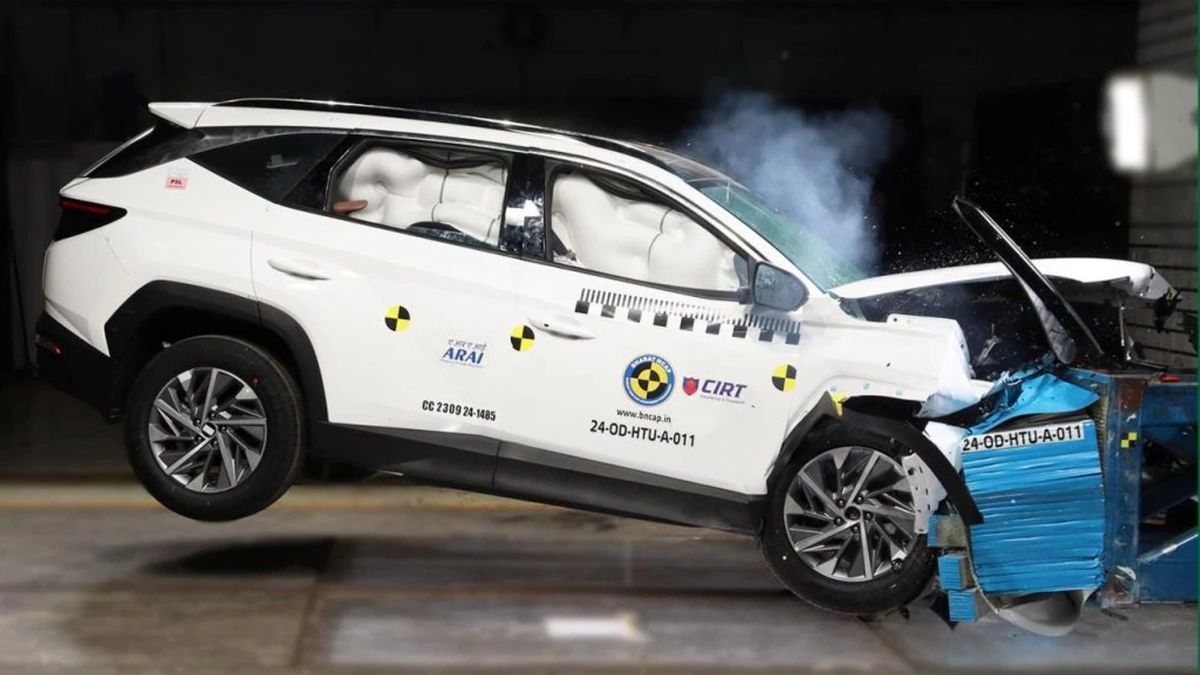
So, how will this actually work? Let’s break it down. Bharat NCAP will involve a series of standardized tests designed to assess a car’s safety performance. These tests will likely include:
- Frontal impact test: Simulating a head-on collision.
- Side impact test: Assessing protection in a side collision.
- Pole side impact test: A more challenging test simulating impact with a narrow object like a pole or tree.
- Pedestrian protection test: Evaluating how well the car protects pedestrians in case of an accident.
Cars will then be awarded a star rating, ranging from 1 to 5 stars, based on their performance in these tests. The higher the star rating, the safer the car. The Automotive Research Association of India ( ARAI ) will be conducting these tests. What fascinates me is how these tests will be transparent so that consumers are able to view them.
Now, here’s where it gets interesting. The specific parameters and weightage for each test are still being finalized, but the goal is clear: to align Indian safety standards with global best practices. This means that cars sold in India will need to meet the same rigorous safety standards as those sold in Europe or the United States.
The Impact on Car Manufacturers and Consumers
What will Bharat NCAP mean for car manufacturers? Well, let’s be blunt: it’s going to force them to up their game. Manufacturers who have been cutting corners on safety features will need to invest in improving their designs and technologies. This could mean:
- Strengthening the car’s body structure to better absorb impact energy.
- Adding more airbags to protect occupants in a collision.
- Incorporating advanced safety technologies like electronic stability control (ESC) and autonomous emergency braking (AEB).
And for consumers? The impact will be even more profound. You’ll have access to clear, reliable information about the safety performance of different cars. This will empower you to make informed decisions based on your priorities and budget. No more guessing or relying on marketing hype. You’ll be able to see the data and decide for yourself which car offers the best protection for you and your family.
This transparency is going to revolutionize the automotive safety standards . And of course, these will be easily available on theofficial website. The safety rating system will be similar to what is found in Australia and Europe.
Beyond the Star Rating | What to Look For
While the star rating is a great starting point, it’s not the only factor to consider. It’s essential to look beyond the numbers and understand the specific safety features that a car offers. For example, does it have:
- Anti-lock braking system (ABS)?
- Electronic brakeforce distribution (EBD)?
- ISOFIX child seat anchors?
- Seatbelt reminders for all occupants?
These features can make a significant difference in preventing accidents and reducing injuries. Don’t just focus on the star rating; delve into the details and ensure that the car you choose is equipped with the safety features that matter most to you.
And here’s a pro tip: Don’t be afraid to ask questions. Talk to your dealer, do your research, and read reviews from reputable sources. The more informed you are, the better equipped you’ll be to make a safe and smart decision.
Speaking of smart decisions, understanding how to manage your finances is also important. Check out this article on averaging down strategy . It’s a handy skill to have.
Challenges and the Road Ahead
Of course, the implementation of Bharat NCAP won’t be without its challenges. There will be hurdles to overcome, such as:
- Ensuring consistent and reliable testing procedures.
- Educating consumers about the importance of safety ratings.
- Addressing the cost implications for manufacturers and consumers.
But these challenges are surmountable. With collaboration between the government, industry, and consumers, Bharat NCAP has the potential to transform the automotive landscape in India and save countless lives.
I initially thought this was straightforward, but then I realized the importance of public awareness. The success of Bharat NCAP hinges on whether people understand its importance and demand safer cars. Find out how the auto sector is set to revive , with an increase focus on safety.
Frequently Asked Questions (FAQ)
FAQ
What exactly is Bharat NCAP?
It’s a new car assessment program for India, designed to evaluate and rate the safety performance of vehicles.
When will Bharat NCAP be implemented?
The new norms are expected to be in full effect by 2027.
How will cars be rated under Bharat NCAP?
Cars will be awarded a star rating from 1 to 5, based on their performance in standardized safety tests.
Will this increase the cost of cars?
It’s possible, as manufacturers may need to invest in additional safety features.
Where can I find the Bharat NCAP rating?
Ratings will be available on the official website and through authorized sources.
Is Bharat NCAP mandatory?
Initially it will be voluntary, but expected to be made mandatory based on consumer demand and government legislation.
In conclusion, Bharat NCAP is a game-changer for car safety in India. It’s a bold step towards creating a safer environment for drivers, passengers, and pedestrians. It’s about empowering consumers, holding manufacturers accountable, and prioritizing human lives. The impact on vehicle safety standards are significant. While the implementation will be voluntary initially, it holds a lot of potential.