

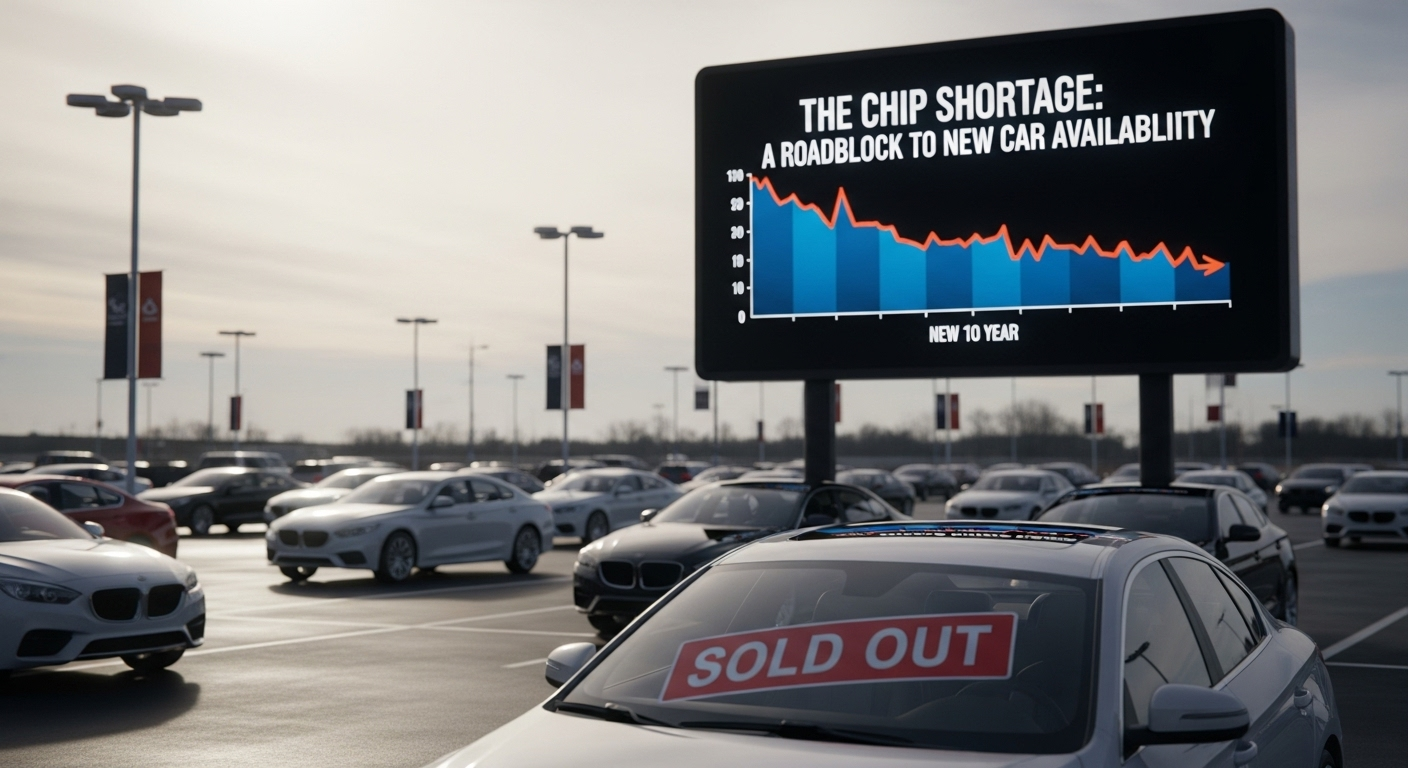
So, you’re in the market for a new car, huh? Exciting times! Or, at least, they should be. But lately, it feels more like navigating a minefield than strolling through a showroom. What’s the deal? Well, pull up a chair, because it all boils down to something surprisingly small: chips. Microchips, to be exact. These tiny silicon brains are the backbone of, well, pretty much everything these days. And a global shortage? Yeah, that’s throwing a massive wrench into the works, especially when it comes to those shiny new vehicles we all crave.
It’s not just that the cars are delayed either. The whole buying process is different and often frustrating. I remember back in 2019, you could haggle like a pro, walk away with a sweet deal, and drive off the lot that same day. Now? Forget about it. Dealers have less inventory, which means less incentive to budge on price. And that’s before we even get to the stripped-down features…
Why Are Chips So Important for Cars Anyway?

You might be thinking, “Chips? In my car? I thought those were just for computers and phones.” But modern cars are basically computers on wheels. Seriously. Everything from your power windows and infotainment system to your engine management and safety features relies on these little guys. Anti-lock brakes? Chips. Airbags? Chips. Even adjusting your seats sometimes needs a microchip assist. The average new car can contain hundreds, even thousands, of them!
Here’s the thing: different chips do different things. Some are simple, some are incredibly complex. The automotive industry needs a whole range. When production of these chips grinds to a halt, or even slows down significantly, the entire car manufacturing process suffers. It’s like trying to bake a cake without eggs – you can try, but it’s probably not going to turn out so well.
The Roots of the Chip Shortage
Okay, so how did we get into this mess? Well, it’s a perfect storm of factors, really. The COVID-19 pandemic played a huge role, obviously. Lockdowns disrupted supply chains worldwide, and factories that produce chips had to scale back or temporarily close. At the same time, demand for electronics soared as people worked and learned from home, gobbling up available chip supply. But, wait, there’s more! Gaming platforms became exceedingly popular, which meant chips were in high demand.
Then there’s the issue of geopolitical tensions and trade wars. The concentration of chip manufacturing in a few regions, particularly East Asia, makes the industry vulnerable to disruptions. A single event, like a natural disaster or a political flare-up, can have ripple effects across the globe. And those effects are still being felt today.

But it gets even more complicated! Automakers initially reduced their chip orders when the pandemic hit, anticipating a slump in car sales. Big mistake. Demand bounced back faster than expected, leaving them scrambling to secure chip supplies that were already being snapped up by other industries. It’s like being late to the party and finding all the good snacks are gone. Actually, that’s not quite right. It’s like being late to the party and finding out they ran out of plates, forks, and cups, so even if there were snacks, you couldn’t eat them. See? More complicated.
Impact on New Car Availability: What You Need to Know
So, what does all this mean for you, the prospective car buyer? In short, expect to find fewer cars on dealer lots. And the cars that are available might not have all the features you want. Some manufacturers are shipping vehicles without certain options (like heated seats or advanced safety systems) in order to keep production lines moving. They might offer a discount, or promise to retrofit the missing features later. It’s a bit of a gamble, to be honest.
And those stripped-down features? That’s a cost saving initiative too. Just like Royal Enfield is doing with their bikes, car makers are cutting off some features, offering less options, so that the cost of the car itself won’t be too much.
Prices are also up, thanks to the basic economic principle of supply and demand. With fewer cars available, dealers have less reason to offer discounts. In some cases, they’re even adding markups above the manufacturer’s suggested retail price (MSRP). It’s frustrating, I know. But here’s the thing: waiting might not be the best option either. Used car prices are also inflated right now, so trading in your old vehicle might not get you as much as you’d hoped.
The frustrating thing about this whole situation is the uncertainty. Nobody knows exactly when the chip shortage will end. Some experts predict it will ease up in the second half of 2023, while others say it could last well into 2024 or beyond. It’s a moving target, and that makes planning difficult.

Navigating the New Car Market During the Shortage
Okay, so what can you do if you need a new car now? First, be prepared to be patient. Shop around, but don’t expect to find a huge selection. Consider expanding your search radius – you might have better luck finding what you want at a dealer further away. And be flexible on features. Do you really need those premium leather seats, or are you willing to settle for cloth if it means getting a car sooner?
Think about ordering a car directly from the manufacturer. This can give you more control over the options and features, but it also means a longer wait time. Be sure to get a firm price quote in writing before placing your order, and understand the dealer’s cancellation policy.
Explore alternative transportation options, if possible. Can you get by with public transportation, biking, or ride-sharing for a while? Maybe you can postpone your purchase until the chip shortage eases up. This isn’t always practical, of course, but it’s worth considering.
You might also consider a certified pre-owned vehicle. These cars have been inspected and reconditioned by the manufacturer or dealer, and they often come with a warranty. You can save money compared to buying new, and you might find a wider selection of vehicles available. Just do your homework and check the car’s history before you buy. You might also want to check out our iPad Pro 11 review, that way you can take some entertainment with you while you shop.
FAQ: Chip Shortage Woes
Will car prices ever go back down?
That’s the million-dollar question, isn’t it? While it’s hard to say for sure, most experts believe that car prices will eventually come down, but it’s unlikely they’ll return to pre-pandemic levels. Several factors are contributing to the higher prices, including increased production costs, new technologies, and strong consumer demand. Even when the chip shortage is resolved, these factors will continue to influence pricing.

How long will the chip shortage last?
This is another tough one. Estimates vary widely, but the general consensus is that the chip shortage will gradually ease over the next year or two. Some analysts predict that supply will catch up with demand by late 2023 or early 2024, while others believe it could take longer. It really depends on a number of factors, including the pace of chip production, the evolution of the pandemic, and geopolitical stability.
Is it better to buy a car now or wait?
This depends on your individual circumstances. If you absolutely need a car right now, then you don’t have much choice. But if you can afford to wait, it might be worth postponing your purchase. Keep in mind that used car prices are also inflated, so trading in your old vehicle might not be as advantageous as it usually is. The best approach is to weigh your options carefully and make a decision that makes sense for your budget and needs.
Are some car brands less affected by the chip shortage?
Yes, some brands have managed the chip shortage better than others. This could be due to a variety of factors, such as stronger relationships with chip suppliers, more efficient supply chain management, or a willingness to simplify vehicle features. It’s worth researching which brands are currently offering better availability and shorter lead times.
So, there you have it. The chip shortage and its impact on new car availability – a complicated issue with no easy answers. But hopefully, this has given you a better understanding of the situation and some strategies for navigating the current market. Happy car hunting (or, you know, patiently waiting)!